The United Arab Emirates has a rich artistic identity shaped by desert life, sea journeys, pearl-diving traditions, poetry gatherings, and festive celebrations. Among the strongest parts of this heritage are the handcrafted musical instruments created and played across the Emirates for many generations. These instruments reflect the creativity, skill, and cultural memory of the region. Even today, musicians, craft makers, and cultural groups continue to preserve these traditional tools through performance, festivals, workshops, and community events.
The Heartbeat of Emirati Rhythm: The Traditional Drums
Drums form the foundation of many Emirati performances. Their beats guide dancers, singers, and storytellers. Skilled makers use natural materials, shaping each drum by hand with care.
Al-Rahmani
Al-Rahmani is one of the most famous drums in the region. It delivers deep, warm tones that anchor the music during traditional dances.
Key Features
- Cylindrical body crafted from durable wood
- Two sides covered with stretched animal hide
- Played with sticks or hands depending on the style
- Produces a heavy, steady rhythm
It is used in Ayala, Harbiya, and many other folk dances, as well as during weddings and national celebrations. The shared rhythm also makes it a symbol of unity, with performers standing in lines following the same beat.
Al-Ras
Al-Ras delivers a strong, commanding sound. It is typically larger than other drums and is carried using a strap. Its wide frame, thick hide, and strong vibration make it perfect for creating the opening and closing beats of many performances.
When It Is Used
- Leading parades
- Sporting events
- Sea-themed songs and group chants
Al-Tabl
Al-Tabl is a mid-range drum that blends smoothly with singing and string instruments. It is lightweight and easy to carry, produces a sharp yet balanced sound, and is often decorated with traditional patterns or motifs.
The Melodic Soul of the Desert: String Instruments
These will bring softness and emotional depth to Emirati performances. Their gentle tones often accompany poetry, solo singing, and peaceful gatherings.
The Oud
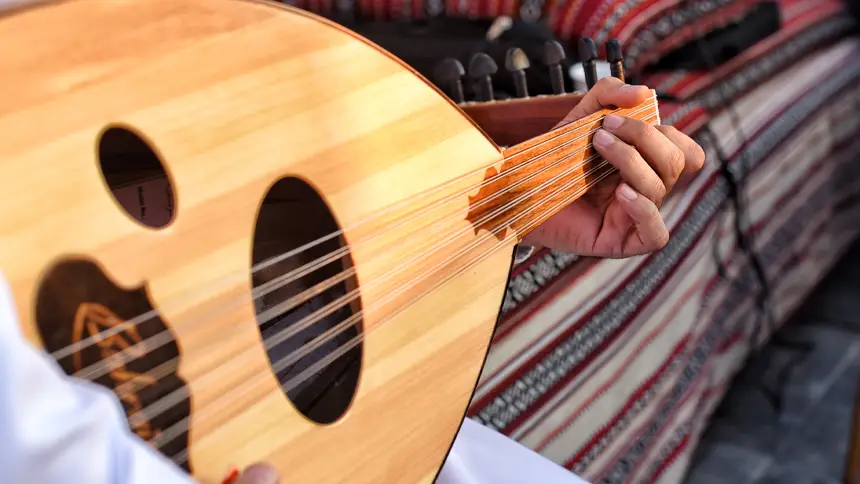
The oud is one of the most treasured instruments in the Arab world and has a long presence in the Emirates. Skilled makers shape its wooden body into a curved bowl and attach several strings that deliver warm, expressive notes.
Crafting Process
- Selection of walnut, rosewood, or other high-quality timber
- Carving the bowl using traditional tools
- Adding a flat face with a sound hole
- Fixing multiple strings for different tonal ranges
It has a smooth, emotional tone that suits storytelling and poetry nights, and it is often performed by soloists.
The Rebab
The rebab is a unique bowed instrument with one or two strings. Its sound is raw and soulful, bringing a nostalgic feel to performances. It has a slim wooden body, a leather top, and a light horsehair bow. It is commonly used in Bedouin poetry recitals, heritage festivals, and traditional theatre productions.
The Wind Instruments of the Emirates: Calling Across the Sands
Wind instruments hold an important place in Emirati culture. Their sounds once echoed across deserts, villages, and coastal regions.
Al-Suffar (Traditional Flute)
This flute is crafted from metal, wood, or reed. It creates clear, bright tones that cut through the rhythms of drums. It is a straight, narrow tube with multiple finger holes and is light enough for long performances. It is used for solo openings, background music in dances, and storytelling with musical accents.
Maritime Horns
In earlier times, horns made from shells or metal signalled returning boats, guided divers, and marked important gatherings. It was used to communicate across coastal areas, support sea-songs, and create dramatic moments in folk theatre. Though less common today, they remain part of heritage demonstrations and cultural museums.
The Percussive Tools That Add Texture
Beyond large drums, Emirati music includes many smaller rhythm instruments handmade with expert care.
- Takhteh – also known as the clapboard, is made from two flat wooden pieces that create sharp sounds and add lively rhythm to dances, help performers keep timing, and require very little maintenance.
- Mirwas – This small hand-held drum produces light, crisp beats and is often used in pearl-diving songs, played in groups, and known for handling fast rhythmic patterns well.
- Brass or Wooden Cymbals – Small cymbals are tapped to create shimmering effects, marking transitions, highlighting dance steps, and adding shine to festive songs.
The Deep Connection Between Craft skills and Identity
Artisanal instruments of the Emirates are more than musical tools. They represent memories, craft skills, and traditions passed through generations.
Craft makers, often taught by the elderly, spend many hours shaping each instrument by selecting natural materials, carving and smoothing the wood, preparing hides, decorating the surface with patterns or calligraphy, and tuning it for the best sound. This careful process demands patience and skill, and each maker’s personal touch ensures that no two instruments are exactly the same.
They create a connection to ancestors through desert and sea music and celebrate community during festivals and dances. They also help preserve heritage through workshops and cultural centres while expressing emotion through melodic storytelling.
Traditional Instruments in Modern Entertainment
Although the Emirates is known for advanced entertainment venues, global concerts, and modern arts, traditional instruments still play an important role. Many musicians combine old and new styles to create a fresh sound.
Fusion Performances
Contemporary artists mix electronic beats with oud melodies, drum patterns with modern vocals, and rebab solos with digital effects, creating a fusion that keeps heritage alive while appealing to young audiences.
Cultural Festivals
Events across the Emirates, from National Day celebrations and cultural district shows to heritage villages, folk dance competitions, and art expos, highlight artisanal music and help people appreciate the richness of Emirati traditions.
Tourism and Entertainment Venues
Many resorts, museums, and theatres host traditional music nights. Travellers enjoy seeing artisans explain how instruments are made while musicians perform live pieces.
These experiences strengthen the entertainment landscape and create bridges between modern leisure and historical artistry.
The Role of Music in Community Gatherings
Music has long brought people together in the Emirates, adding warmth and connection to both major celebrations and quiet family moments. Drums guide wedding dances, the rebab or oud accompanies storytelling circles, and groups sing sea songs that recall old diving journeys. In villages, children learn simple rhythms, and desert nights are often filled with poetry supported by gentle melodies. These traditions strengthen a sense of belonging and keep shared history alive.
Conclusion
The artisanal musical instruments of the Emirates are a beautiful part of the country’s cultural life. Each drum, flute, or string instrument carries stories from the desert, the sea, and the old villages. Skilled makers shape these instruments with patience, using natural materials and traditional designs. Musicians then bring them to life through performances that fill festivals, weddings, and cultural events with energy.
Even though modern entertainment has grown in the Emirates, traditional instruments still have an important role. They connect people to their heritage and remind everyone of the creativity found in earlier times. By teaching new generations how to play and make these instruments, the country ensures that its musical identity continues to shine. These handmade instruments are not only tools for music, they are symbols of memory, community, and pride.