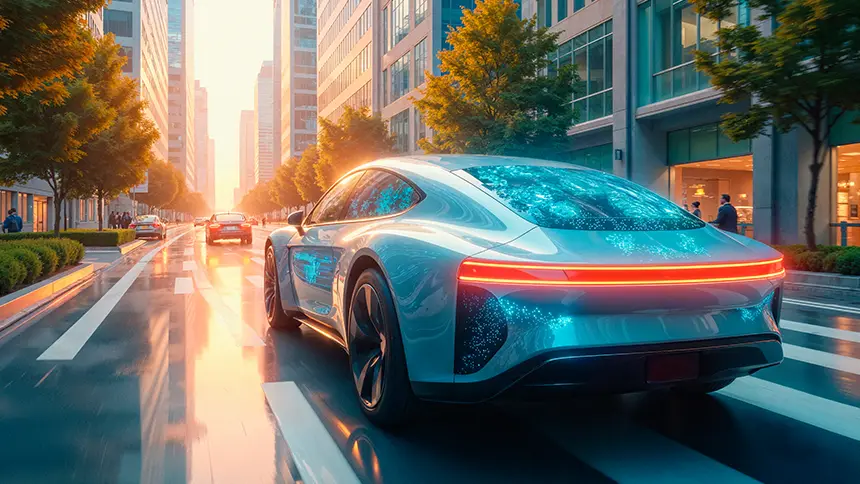
Dubai is racing toward a future where many of the cars, taxis, and buses on its streets will drive themselves. Using modern technology such as artificial intelligence, sensors, cameras, and detailed digital maps, the city is working to create a transport system that is safer, greener, and much more efficient than today.
This move is not only about technology, it is about making daily life easier for people. Driverless cars could reduce traffic jams, save travel time, cut down on pollution, and even make the roads safer by reducing human mistakes. Dubai has already started building this future through strong strategies, international partnerships, and pilot projects with leading technology companies.
Smart Transport Strategy & Goals
Dubai’s vision of smart transport is much bigger than just using driverless cars. It is part of a broader plan to make the city’s transportation network more modern, connected, and friendly to both people and the environment.
Some of the key goals include:
- Smart Self-Driving Transport Strategy: Dubai wants 25% of all daily trips in the city to be made using driverless or smart transport by 2030. This shows just how ambitious the city is in embracing this technology.
- Benefits for people and the city: If these plans succeed, residents and visitors will save millions of hours currently lost sitting in traffic. The city also expects fewer accidents, lower transportation costs, and cleaner air thanks to less pollution.
- Commercial rollout by 2026: Pilot trials with driverless taxis and other vehicles are already being tested. Full commercial services are expected to start by 2026.
These projects are being led by the Roads and Transport Authority (RTA) and supported by private companies, government bodies, and international partners.
Key Initiatives & Projects
Dubai is not only planning; it is already taking action with several major projects.
The RTA has teamed up with Pony.ai, a company specializing in autonomous driving technology, to launch robotaxis. These will conduct supervised trials and fully driverless rides planned for 2026.
The Dubai Taxi Company (DTC) is also preparing its own driverless taxi service. The company is currently working on safety measures, new regulations, and identifying the best locations for launch. Their service is expected to begin in early 2026.
At the same time, Uber has partnered with WeRide, a Chinese technology company, to bring self-driving rides to Dubai through the Uber app. Trials will begin later, with full services expected to roll out by 2026.
Another big project involves Cruise, the self-driving branch of General Motors. Cruise is planning a large-scale driverless taxi service in Dubai that will use advanced mapping, sensors, and specially designed infrastructure. Their goal is to have thousands of autonomous vehicles on Dubai’s roads by 2030, if trials go as planned and safety approvals are granted.
Together, these projects show that Dubai is building a strong ecosystem for smart transport, not depending on just one company but creating a network of global partnerships.
Challenges & Considerations
While these plans are exciting, making them work in real life is not simple. Dubai faces several challenges that need careful attention.
Safety & Regulation
The number one concern is safety. Driverless vehicles must work perfectly in all conditions, rain, heavy traffic, or crowded pedestrian zones. Clear rules and strict testing are necessary.
Technology Readiness
Autonomous cars depend on cameras, radar, lidar, AI systems, and accurate maps. These technologies are improving quickly but still need to be extremely reliable before they can be widely used.
Infrastructure Needs
Smart cars need smart roads. That means better road markings, digital maps, charging stations (since many will be electric), and fast data networks. Dubai is already working on this, but it takes time and money.
Public Trust
People may hesitate to get into a car with no driver. To build trust, pilot programs are important, so people can experience the technology safely.
High Costs
Building infrastructure and running advanced vehicles is expensive. Governments and companies need to make sure the benefits outweigh the costs.
Legal & Insurance Issues
If an accident happens, who is responsible, the company, the car owner, or the software maker? New laws and insurance systems must be created to handle such cases.
Potential Impacts
If Dubai manages to achieve its smart transport vision, the benefits could be huge.
- Less Traffic Jams: Smarter routing and fewer accidents could make daily traffic smoother and faster.
- Cleaner Air: Many driverless vehicles are expected to be electric, which will reduce emissions and make the air healthier to breathe.
- Safer Roads: Most accidents are caused by human error. Removing the driver from the equation could prevent many crashes.
- Better Accessibility: Driverless cars could help people who cannot drive, like the elderly or those with disabilities, giving them more independence.
- Economic Growth: By saving time and fuel, reducing accidents, and creating new jobs in tech and transport, Dubai could also strengthen its economy.
What to Watch For
As Dubai moves forward, here are a few things to pay attention to-
- Pilot results in 2025: The trials with Pony.ai, Uber-WeRide, and others will show how ready the technology is.
- New rules and regulations: Updates in traffic laws, safety standards, and privacy rules will shape the industry.
- Public reaction: Will people feel safe enough to use robotaxis regularly? Will prices be fair compared to normal taxis?
- Infrastructure progress: More EV charging stations, smart traffic systems, and reliable mapping will be key.
- Integration with other transport: How well will driverless cars work alongside the metro, trams, and buses? Good integration will make the whole system stronger.
Conclusion
Dubai has set itself a bold challenge, by 2030, one out of every four trips in the city should be made using driverless or smart transport. By 2026, robotaxi services from Pony.ai, Dubai Taxi Company, Uber & WeRide, and other projects should already be on the road.
Yes, there are big challenges, like safety, costs, and public acceptance, but Dubai is investing heavily and moving quickly to overcome them. If successful, the city will enjoy smoother traffic, cleaner air, safer roads, and more accessible transport for all.
Dubai is betting big on driverless cars to make life easier, faster, and cleaner for its people. It won’t happen overnight, but with strong leadership, global partnerships, and smart planning, the city is well on its way to turning this dream into reality. And as Dubai leads the way, other cities around the world may soon follow its example.