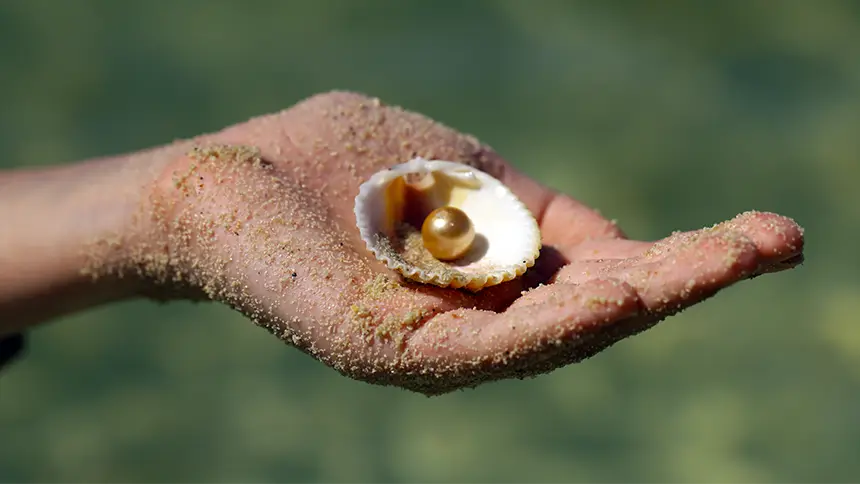
Before the rise of tall skyscrapers and oil wealth, Dubai was a small fishing village on the Arabian Gulf. Its people lived simple lives, depending on the desert and the sea. Among the most important traditions that shaped their survival was pearl collecting. For centuries, men braved the deep waters to search for natural pearls, tiny treasures hidden inside oysters. These pearls were not only a source of income but also a symbol of beauty, wealth, and pride.
The story of Dubai’s pearl history is one of courage, hardship, and resilience. It reminds us of how people lived in harmony with the sea long before modern comforts came into their lives.
The Importance of Pearl Diving
Pearl diving was not just an occupation; it was the lifeblood of Dubai’s early society.
Economic Backbone
For hundreds of years, pearls were the main source of income for the region. Since farming was almost impossible in the desert and fresh water was scarce, the sea became the only dependable source of livelihood. Pearls from the Gulf were considered some of the finest in the world and were highly demanded in India, Persia, and Europe.
Global Connections
The pearl trade turned Dubai and other Gulf towns into important trading centers. Merchants from faraway lands visited these shores to buy pearls and sell goods like rice, cloth, and spices. This global exchange introduced new cultures and ideas to Dubai long before it became a modern trade hub.
social fabric
This Industry brings communities together. Every family in Dubai was connected to the industry in some way, whether as divers, sailors, traders, or craftspeople. Women played a vital role at home, looking after families and waiting anxiously for the safe return of the men. This shared struggle created a strong sense of unity.
The Pearl Diving Season
The most awaited time of the year was the season, known as Al Ghous Al Kabir (The Big Dive). It usually took place from June to September, during the hottest months when the sea was calmer and diving conditions were most favorable. Entire towns prepared for this important season well in advance, gathering supplies of food, dates, and water to sustain families while the men were away at sea.
The Voyage
The voyage began when crews set sail on dhows, the traditional wooden boats with triangular sails that carried them out to sea. Each dhow usually had around twenty to thirty men on board, with every member of the crew playing an important role. At the head was the Nokhuda, or captain, who guided the expedition and made key decisions during the journey. The divers carried the heaviest responsibility, risking their lives to plunge into the depths and collect oysters. Supporting them were the haulers, who pulled the divers back to the surface using ropes, ensuring their safety after each exhausting dive. Alongside them were the cooks and apprentices, who handled daily tasks, prepared meals, and maintained order on the dhow. Together, these men formed a close-knit team, bound by duty and survival as they ventured into the open sea in search of pearls.
How They Dived
With no oxygen tanks or modern equipment, divers relied only on their lungs, strength, and courage to survive beneath the waves. To prepare, they wore nose clips made of turtle shell or bone to stop water from entering and protected their fingers with small leather guards to avoid cuts from sharp oyster shells. Around their necks hung a woven basket, ready to hold the oysters they gathered from the seabed. To descend quickly, they tied weighted stones to their feet, which pulled them deep into the water. Once at the bottom, they worked swiftly, prying oysters loose and placing them into the basket before tugging the rope to signal the haulers above. Each dive was short but intense, lasting up to two minutes and reaching depths of ten to fifteen meters, demanding both skill and immense bravery from the divers.
Life at Sea
Conditions on board were extremely tough. Meals were simple, usually rice, dates, dried fish, and water. The men worked from sunrise to sunset, diving dozens of times each day. There was little rest, and the heat of the Arabian summer made the experience even more exhausting.
Risks and Challenges
Pearl diving was one of the most dangerous and exhausting professions in history. Divers had to hold their breath for long stretches of time while plunging deep into the sea, and many fainted underwater or were unable to resurface in time. Countless lives were lost to drowning, making every dive a gamble with death. The dangers did not stop there, as the waters of the Arabian Gulf were home to sharks, stingrays, and jellyfish. Divers often came back to the boat with painful stings, cuts, or injuries that added to their suffering.
Even above the water, life was harsh and unforgiving. The blazing summer sun scorched the men as they worked long hours, while salty winds and sudden storms made sailing unpredictable and risky. A single storm could damage the wooden boats and endanger the entire crew. To make matters worse, months of backbreaking effort often brought little reward, as a poor season meant few valuable pearls. This uncertainty left families anxious and insecure, relying on hope and prayer that the sea would be generous enough to provide.
The Decline of the Pearl Industry
For centuries, Dubai’s economy revolved around pearls. But in the early 20th century, the industry began to collapse.
- Cultured Pearls from Japan: In the 1920s, Japan introduced cultured pearls- artificially grown pearls that looked almost identical to natural ones but were much cheaper. This invention reduced the demand for Gulf pearls drastically.
- The Great Depression: The worldwide economic crash of the 1930s weakened global markets. Pearls, being luxury items, were no longer in high demand.
- Oil Discovery: By the 1950s, oil had been discovered in the region. With new opportunities in oil, trade, and construction, people moved away from the industry, which was dangerous and no longer profitable.
Within a few decades, an ancient tradition that once supported entire communities faded into history.
Legacy of Pearl Diving
Although pearl hunting no longer exists as an industry, its spirit lives on in Dubai’s culture and heritage.
- Cultural Preservation: Museums, heritage centers, and festivals showcase the tools, boats, and methods of this industry. Visitors can see wooden boats, baskets, nose clips, and even real pearls from the past.
- Storytelling and Folklore: Elders still share tales of the hardships and bravery of divers. These stories keep alive the memory of a time when life was much simpler but also far more difficult.
- Tourist Experiences: Some places in the UAE now offer pearl hunting tours, where visitors can experience how it felt to search for oysters in a traditional style.
- Symbol of Identity: Pearls represent resilience, patience, and survival. They remind modern Dubai of its humble roots and the struggles of those who came before.
Conclusion
Dubai’s pearl diving history is a journey into the past, showing us how people lived with courage and determination. Long before oil changed everything, men risked their lives diving into the sea, hoping to find pearls that could feed their families. Their sacrifices built the foundation of a community that grew strong despite hardship.
Today, when we look at Dubai’s glittering skyline, it is easy to forget that this global city once depended on tiny pearls hidden in oysters. Remembering this history helps us understand how far Dubai has come from a small pearl fishing village to one of the most modern cities in the world.