Glittering towers, bustling malls, and sleek cars often define the image of Dubai seen by the world. Yet, behind this modern image lies a deep cultural heritage shaped by the Bedouins, nomadic desert dwellers who roamed the Arabian Peninsula for centuries. In the harsh desert environment, the Bedouins lived with very few resources, relying on their skills, resilience, and strong community values to survive.
Although Dubai has transformed into a global hub for business and tourism, many of these Bedouin traditions have not disappeared. Instead, they have adapted and blended with modern life, keeping cultural roots alive. From hospitality and food to music, clothing, and storytelling, these customs still influence daily life in Dubai and are proudly showcased in festivals, heritage villages, and community gatherings.
The Hospitality
Hospitality is one of the most important values in Bedouin culture, and it remains strong in Dubai. In the desert, survival depended on welcoming travelers, sharing food, and offering shelter. This tradition continues today.
Coffee and Dates (Gahwa & Tamr)
Guests are often welcomed with Arabic coffee (Gahwa) and fresh dates, a ritual that symbolizes respect and generosity. Serving coffee from a dallah (traditional coffee pot) still happens in Emirati homes and at cultural events.
Majlis Tradition
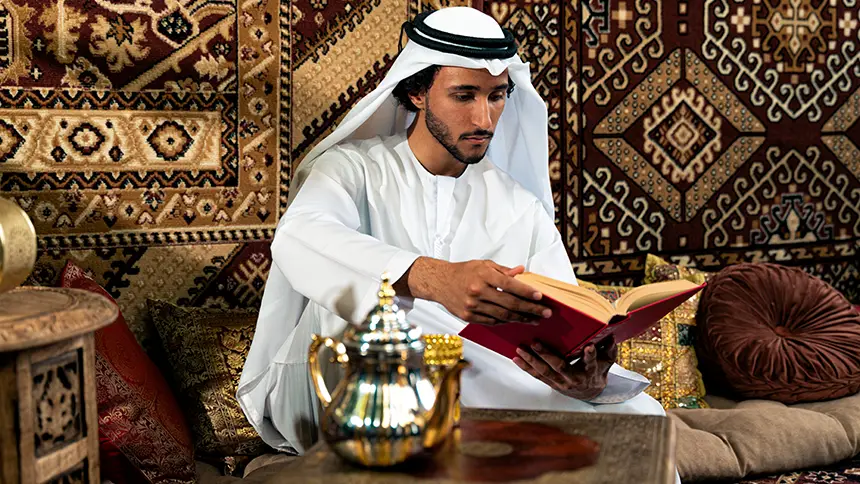
The majlis is a sitting room where families and guests meet. It is a place for conversations, storytelling, and decision-making. Many Emirati houses still have a majlis and they still maintain this custom.
Camel Culture
For centuries, camels were the backbone of Bedouin life because they provided transport, milk and meat. Even in modern Dubai, the bond remains alive.
- Camel Racing: this popular sport is held on special tracks where camels compete with high-tech robot jockeys.
- Camel Farms: Many Emiratis still raise camels. These farms produce camel milk, which is rich in nutrients. Camel milk products have become popular for their health benefits.
Traditional Clothing
The desert lifestyle shaped the way of clothing. Today, these garments are still worn proudly for daily use and cultural identity.
Men’s Clothing
The kandura (long white robe) remains the national dress for Emirati men. It is designed to keep cool in the hot desert climate and symbolizes heritage. A ghutra (headscarf) with an agal (black cord) protects us from the sun and sand.
Women’s Clothing
Women traditionally wear the abaya (long black cloak) and the shayla (headscarf) covers the hair. Also, some older women still wear the burka (traditional face covering). These represent modesty, elegance, and cultural pride.
This traditional attire is still widely respected and worn on special occasions and national holidays.
Falconry – The Desert Sport
Falconry is one of the oldest Bedouin traditions. Falcons were once used to hunt in the desert. Today, it is considered both a sport and a cultural symbol.
- Falcon Training: Emiratis still practice the art of training falcons. This required patience and skill.
- Falconry Festivals: Dubai hosts falconry competitions and exhibitions, keeping the heritage alive. Dubai still treasures falconry as a national sport.
- National Identity: Falcons are so important that they even appear on the UAE passports, official symbols and banknotes.
Storytelling and Poetry
In the desert, where entertainment options were limited, Bedouins passed down knowledge and entertainment through storytelling and poetry. Stories about heroism, tribal history, and moral lessons are passed down through generations. In this Nabati Poetry, a form of Arabic poetry used to share emotions, wisdom, and history. It is still performed at cultural events and festivals. Poetry competitions and TV shows celebrate Nabati poetry, keeping it relevant.
Music and Dance
Music and dance are essential for celebrations, weddings, and gatherings. Many of these art forms remain part of Emirati culture.
- Al Ayala Dance – A traditional war dance performed by a group with sticks and drums, symbolizing unity and strength.
- Al Razfa Dance – A rhythmic performance used in celebrations.
- Oud (lute) and drums – Traditional instruments that create the unique Bedouin sound in cultural performances.
Bedouin Cuisine
Food was simple but nourishing in Bedouin life, shaped by the desert environment. Many of these dishes remain popular in Dubai today.
- Dates and milk – A daily source of energy.
- Camel milk – Nutritious and still sold today.
- Fish and meat – Often grilled or cooked over open fires.
- Machboos – Spiced rice with chicken, lamb, or fish.
- Harees – Wheat and meat slow-cooked into a soft dish.
Desert Skills and Survival Knowledge
Bedouins were experts at surviving in the harsh desert. Modern technology has replaced the need for many of these skills, but they are still remembered and taught.
- Navigation by Stars: Bedouins used the stars to find their way in the desert. Today, these skills are taught in cultural programs.
- Tent Life: Bedouin tents made of goat hair which were strong, cool, and portable. They are still displayed in heritage villages and festivals.
The values of conserving resources and living sustainably are rooted in Bedouin traditions and remain relevant in Dubai.
Handicrafts
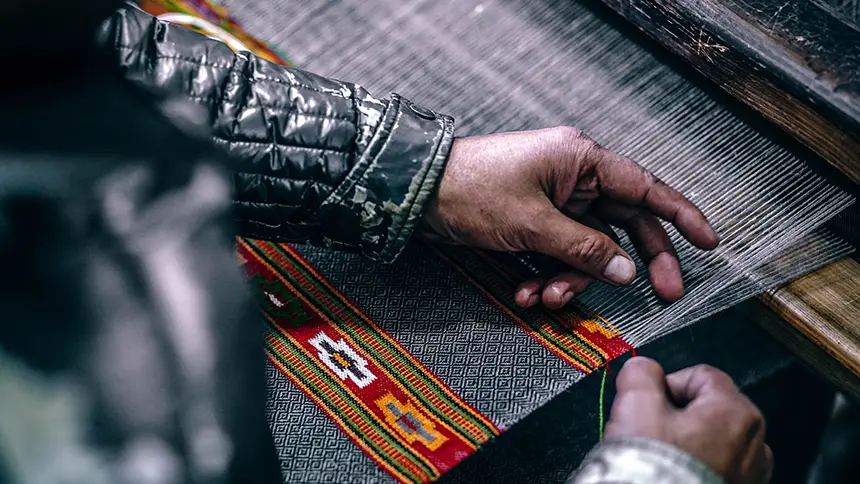
Handmade crafts were a vital part of Bedouin life, both for necessity and art. These traditions are still preserved through cultural exhibitions and heritage markets.
- Al Sadu weaving – Women wove colorful textiles for tents, carpets, and cushions.
- Pottery and metalwork – Simple, functional crafts used for cooking, storing water, and decoration.
- Jewelry making – Silver ornaments were part of women’s attire.
Souqs and heritage centers in Dubai still sell these handmade items. Cultural exhibitions keep art alive by teaching weaving and pottery.
Architecture and Lifestyle
Traditional desert homes were designed for comfort in extreme weather. Elements of Bedouin architecture are reflected in modern Dubai also.
- Wind Towers (Barjeel): Used for natural air conditioning.
- Courtyard Homes: Designed to provide privacy and shade.
Dubai preserves these in heritage sites like Al Fahidi Historical District. Also, modern villas and cultural centers borrow elements from traditional Bedouin architecture.
Religious and Social Values
The Bedouins lived on strong values of faith, family, and community, which continue to shape Dubai’s society.
- Faith in Islam: Religion was the foundation of Emirati culture. Islam guided the Bedouins’ way of life.
- Family Ties: Respect for elders, family unity, and loyalty are core values.
- Community Spirit: Helping neighbors and supporting the tribe has evolved into modern community support in Dubai.
Bedouin Festivals and Celebrations
Festivals and gatherings were a major part of Bedouin life. Today, Dubai celebrates its cultural roots through many events.
- National Day Celebrations: Showcasing Bedouin traditions through performances, parades, and exhibitions.
- Heritage Festivals: Events like the Dubai Shopping Festival and Al Marmoom Heritage Festival include traditional Bedouin music, crafts, food, camel racing and cultural displays.
- Weddings: Many Emirati weddings still include Bedouin-inspired music, dances, clothing, Bedouin-style feasts and rituals.
Conclusion
The Bedouin way of life continues to give Dubai its cultural heartbeat. From the desert came lessons of survival, generosity, and unity, and those lessons still shape the city today. Rather than fading into history, these customs have adapted to modern life, giving Dubai a unique blend of tradition and progress.
For visitors, exploring Bedouin heritage opens a window into the city’s authentic character, beyond its futuristic towers and luxury lifestyle. For Emiratis, it is a living link to their ancestors and a reminder of the values that built their society. Dubai may be modern in appearance, but its roots remain firmly in the desert.